Does My Small Business Need a Website?
If you run a small business, you have probably asked yourself question: Do I need a website?
You already have a Facebook page, perhaps Instagram brings you enough customers.
Maybe most of your work comes from recommendations, repeat customers or local networking. Business is already making money, spending money on a website can feel unnecessary.
That is a fair question. Honest answer is not every small business needs a large, expensive website.
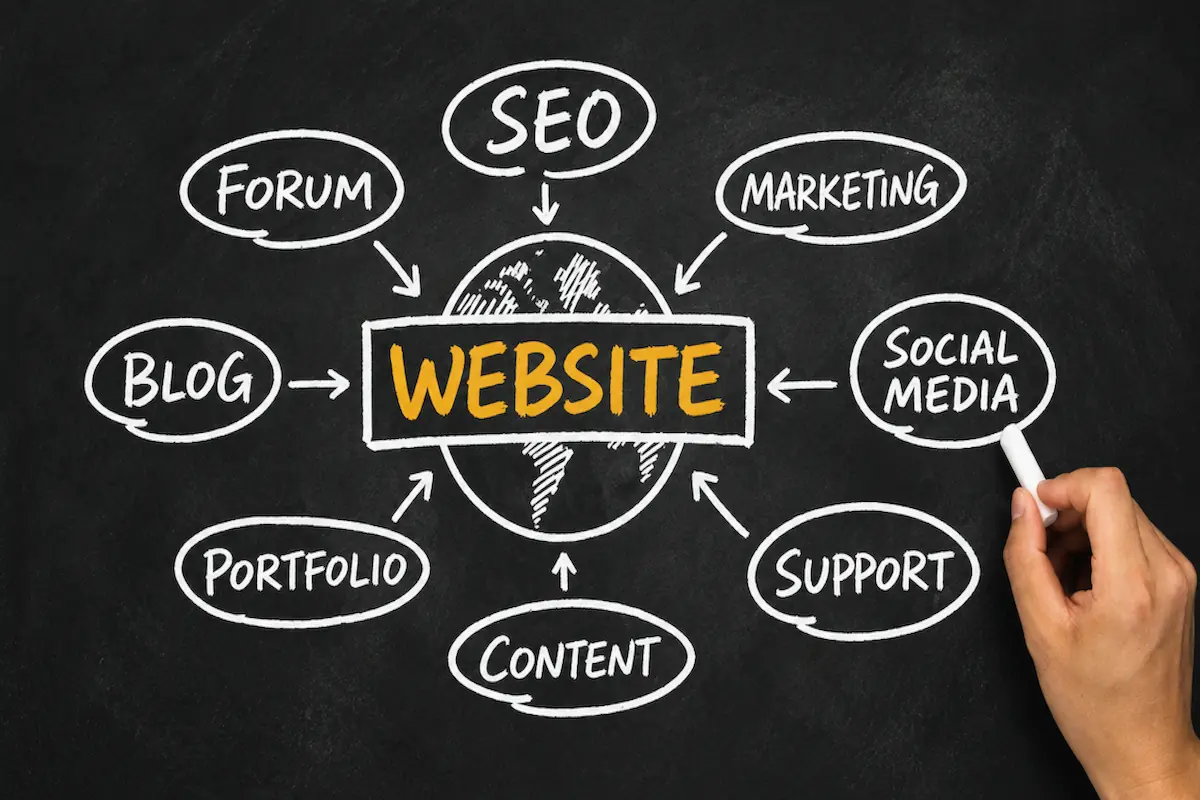
In 2026, an online presence can include Google Search, Google Maps, social media, reviews, directories, a website and increasingly AI-powered search.
For many small businesses, a website is still worth having, but it does need to be complicated?
A good business website should:
- explain what you do
- show where you operate
- answer common customer questions
- if possible demonstrate previous work
- collect enquiries
- provide booking or quotation options
- support Google searchability
- give customers somewhere official place to verify your business so they build trust before someone calls you
However, a website is not automatically a good investment.
A poorly designed website that nobody can find, nobody updates and nobody uses may contribute very little. The idea that websites are disappearing is not supported by the latest UK government data.
UK Business Data Survey 2026 found that 78% of UK businesses reported having a website in 2025–2026, compared with 68% in 2023–2024. The figures were particularly high among larger organisations, but smaller businesses also showed substantial adoption:
- Large businesses 99%
- Medium businesses 97%
- Small businesses 92%
- Micro businesses 84%
- Sole traders 76%
A website remains normal business infrastructure in the UK. Even among sole traders, roughly three quarters reported having one.
“I already have Facebook page”
This is probably one of the most reasonable objections. Facebook can be useful. It might be a major source of customers. Social media can be excellent for attention and interaction, problem appears when you treating it as a complete replacement for your online presence.
A Facebook Page and a website perform different jobs. Facebook is a platform you use. Website is a digital property you control. Facebook controls the platform, its interface, its algorithms, its policies and how content is distributed in other words they are running their own busines; - you run yours.
With your own domain and website, you have considerably more control over your content, brand, structure and customer journey.
This is where the website question becomes more interesting. Imagine somebody recommends your business to a neighbour. Neighbour searches your business name.
What do they find? Ideally, your website. That person is no longer being introduced to business by advertising. They are checking you out.
They asking themselves:
- Do they actually do this type of work?
- Do they serve my area?
- Are they professional?
- Can I see examples?
- What do other customers say about them?
- How can I contact them?
A website gives answer those questions in your own words.
There is evidence that online presentation affects how consumers perceive local businesses. BrightLocal’s research into local business websites found that 36% of respondents said a clear and smart website gives a business more credibility. Consumers researching businesses increasingly cross-check information across multiple sources, including review platforms, websites, social media and video.
In its 2025 survey, 74% of consumers said they use two or more websites when reading reviews before deciding to use business. BrightLocal also found that consumers increasingly want facts and details about experiences rather than simply relying on a star rating.
What about Google?
This is one of the strongest arguments for having your own website. Google explains that businesses can establish their official online presence through their website and Google Business Profile.
A verified Business Profile can display:
- business name
- category
- opening hours
- phone number
- website
- service area or location
- photographs
- reviews
- relevant business links
Google says Business Profiles help businesses appear on Google Search and Maps, maintain accurate information, interact with customers and direct customers towards websites, social media and booking links.
Your website therefore does not replace Google Business Profile - It can support it. Website can give Google additional information about your business, thanks to your webpage customers have somewhere to find detailed information, while Google has additional publicly available information about your business, creating useful information around genuine customer needs.
Website does not guarantee Google traffic
This needs to be said clearly, having a website does not mean:
“I built it, therefore customers will find me.”
Google explicitly says that meeting its technical requirements and best practices does not guarantee that a page will be crawled, indexed or shown prominently in Search. Ranking depends on many factors, including relevance, location, prominence, competition, content and other signals.
So if somebody sells you a website with the promise that it will automatically put your business at the top of Google, be careful.
A website is infrastructure, SEO is a separate activity.
What about AI search?
This is becoming another important part of the website conversation. People are increasingly using AI-powered search experiences to discover information. Google’s current documentation says that AI features such as AI Overviews and AI Mode use the underlying Search systems and can surface links to relevant websites.
Google’s guidance is also very clear: there is NO SPECIAL “AI SEO trick” that replaces normal SEO. - The fundamentals still matter!
Google says that pages need to be indexed and eligible to appear in normal Search to be eligible as supporting links in AI features. The guidance also specifically recommends creating valuable, non-commodity content with a genuine point of view rather than simply recycling information that already exists elsewhere.
What do real business owners say?
Online discussions are useful because they show the other side of the marketing argument.
On Reddit’s r/smallbusiness, business owners regularly debate whether websites are still necessary when Facebook, Instagram, referrals and word of mouth already generate business.
The answers are mixed - it depends on the business model.
Photographer who receives nearly all work through agencies may have little reason to invest heavily in SEO.
A local plumber competing for searches such as: “plumber near me” - has a very different opportunity.
A restaurant may rely heavily on Google Maps, reviews and social media. Consultant may need a website primarily to establish authority and explain expertise.
Beauty business may use Instagram for discovery and a website for services and bookings.
There is no universal answer.
Recent Reddit discussions show exactly this tension. One March 2026 discussion came from someone starting a pet-care business who already had interested customers and was deciding between a Facebook Page and a website. Another 2026 discussion came from a furniture seller who was moving from Facebook toward Google reviews and a website.
These discussions are anecdotal and self-selected, so they are not scientific evidence. However, they are useful for understanding the questions business owners are actually asking.
Reddit also shows the real concern: ROI
A business owner spending £1,000, £2,000 or £5,000 on a website wants to know what the investment is supposed to achieve.
Will it:
- generate enquiries?
- save time?
- answer questions?
- filter customers?
- increase credibility?
- support Google visibility?
- make bookings easier?
- help people find the business?
- allow the business to grow?
If the answer is none of these, then the website may not be a sensible investment.
One 2025 Reddit discussion from a small cleaning business owner, for example, specifically asked whether having a website could save time, filter clients or make bookings easier, rather than simply whether a website looked professional. This is exactly how the question should be approached.
Facebook has something a website does not
It is also important not to swing too far in the other direction. Social media has a major advantage: distribution.
New post can potentially reach people who did not search for your business, before-and-after photograph of a kitchen renovation can appear in someone’s feed. A beauty treatment video can be shared, restaurant can promote tonight’s special offer.
A website generally does not provide that distribution automatically. You normally need: SEO, advertising, referrals, links, social media etc. to get people there. That is why social media should not simply be abandoned because you built a website. Social media is excellent for discovery.
McKinsey’s 2025 consumer research found that social media was used for product research by 32% of consumers across its surveyed markets, up from 27% in 2023. It also found that 29% of surveyed consumers in Germany, the UK and the US had purchased a brand they learned about through social media, even though the eventual purchase could happen somewhere else.
Discovery and conversion do not have to happen in the same place.
The ownership problem
There is another difference that is often overlooked. When you build your business entirely around a social platform, you are building on infrastructure that you do not control.
Platforms can change: algorithms, advertising, products, reach. Your domain is different, it can be moved between hosting providers, can be backed up or design can change. Even after that your domain can remain the central address for your business.
Domain is valuable digital ownership, - your domain can become part of your brand.
There is also a practical credibility issue, imagine you meet a potential customer at a networking event. They remember your company name later that evening, they Google you. Strong online presence can confirm that the business is real and give them more information. In other hand weak online presence creates an information gap.
Lack website does not automatically mean: “This business is unreliable.” But it that the customer has fewer places to verify you.
When you probably do not need a website yet
-
You are testing an idea if you have not validated the business, spending heavily on a website may be premature, - then invest as the business proves itself.
-
Almost all your customers come from a marketplace some businesses operate primarily through Etsy, eBay, Amazon or an industry-specific marketplace. The marketplace may already provide discovery, payments and customer infrastructure - website can still become useful later, but it may not be priority number one.
-
Your business is intentionally very small, side business with a handful of repeat customers and no intention of expanding, a full website may not provide enough return to justify the effort.
-
Your customers are already captive, your work comes through a long-term contract or an established network, a website may be more about credibility than lead generation.
When you probably should have a website
A website becomes much more compelling when you:
- want new customers from Google
- provide local services
- operate in a competitive market
- need to explain multiple services
- sell high-value services
- want to build a recognisable brand
- want customers to request quotations
- want online bookings
- need to demonstrate previous work
- want to publish useful information
- want to build authority in your industry
- want a professional business email and domain
- plan to grow beyond referrals
- want an online asset you control
For many trades and service businesses, this is where a website starts making a lot of sense.
What about a £10,000 website?
For some companies, that might be a five-page website. For another company, it might be a 50-page site with bookings, payments and customer accounts.
A simple website can still be powerful for a local service business, a useful starting structure might be:
- Home - What you do, where you work and why someone should choose you.
- Services - Clear descriptions of the actual services customers are searching for.
- About - Who is behind the business and why customers can trust you.
- Work / Portfolio - Evidence that you can do the job.
- Reviews - Real customer experiences.
- Areas We Cover - Relevant locations where appropriate.
- Contact - Phone, email, enquiry form and any relevant booking option.
That is enough to create a strong foundation.
The biggest mistake is building a website nobody needs - website should start with the customer.
Website + Google + Social Media - The Great Trio
Think of your online presence as an ecosystem, Google helps people find you, social media helps people discover and interact with you, reviews provide third-party evidence.
Your website brings the information together and gives the customer a clear next step. That is the role a webpage should play.
The future is not website vs social media
It is becoming less useful to think about the internet as a collection of isolated platforms.
Customers can discover businesses in various ways: Google Search, Google Maps, Instagram, Facebook, TikTok, YouTube etc. A business needs a reliable source of information behind those channels. That is where your website becomes increasingly useful.
Google’s current AI Search guidance reinforces the importance of unique, useful, people-first website content. Google explicitly says the fundamentals of SEO remain relevant for AI Search and recommends creating valuable content rather than mass-producing generic pages.
What customers actually need from your website?
They usually do not need a technological masterpiece. - They need answers. Website should make it easy to understand:
- Who are you?
- What do you do?
- Where do you operate?
- Why should I trust your business?
- How much does it roughly cost?
- Can I see examples?
- What do previous customers say?
- How do I contact or book an appointment?
- What happens after customer contact you?
Can your website answers those questions clearly?
What about SEO?
SEO can make a website much more valuable, especially for businesses where customers search for services.
For example: ‘electrician in Cambridge’, ‘emergency plumber near me’, ‘kitchen installation Peterborough’. A social media post might reach some people - not necessarly right people. Search result in other hand can appear when somebody has a problem and is actively looking for a solution.
That is a very different type of traffic.
However, SEO takes time, it requires: useful content, technical foundations, relevant pages, local signals, authority and many more.
There is no guarantee. Google itself says that there is no payment required to appear in organic Search, but also makes clear that meeting its requirements does not guarantee crawling, indexing or prominent ranking.
Unlike a single social media post, useful website content can potentially continue attracting visitors after it was published.
The strongest argument for a website: CONTROL
For me, this is one of the biggest reasons a serious business should eventually have one. You are not completely dependent on one platform’s feed. That does not mean independence from the internet, - no business gets that. It means having a home base.
The strongest argument against a website: bad ROI
There is one argument against websites that I completely agree with. A website can be a waste of money. If a business spends thousands on a beautiful website and nobody can find it then it website become an expensive brochure.
The answer is not necessarily to avoid websites. - answer is to build a website that has a job.
So, does your small business need a website?
Here is my honest answer.
You probably need one if: customers search for businesses like yours, you want to grow beyond word of mouth and provide local service for customers or if they need to research you before buying.
You might not need one yet if: you are only testing an idea, your customers come almost entirely through an established marketplace, your business is deliberately tiny.
Even then, the answer may change as the business grows.
Final thought
A website is not a magic lead generator. It is not a substitute for good service or a replacement for Google Business Profile, Facebook or Instagram.
And it should not be built simply because someone told you that every business needs one. For many small businesses, a website can become the central point that connects everything else. Social media can bring attention, Google can bring discovery, Reviews can provide evidence, Referrals can create intent.
Website can bring the information together and give the customer somewhere clear to go next. That is why, in 2026, I would not ask whether a small business needs a website as a simple yes-or-no question.
Sources and further reading:
- UK Government - UK Business Data Survey 2026
- Google Search Central - Establish your business details with Google
- Google Business Profile Help - Get started with Google Business Profile
- Google Business Profile Help - Tips to improve your local ranking on Google
- Google Search Central - Google Search Essentials
- Google Search Central - AI features and your website
- Google Search Central - Optimizing your website for generative AI features on Google Search
- BrightLocal - Local Consumer Review Survey 2025
- BrightLocal - What local consumers want from local business websites
- McKinsey - State of the Consumer trends report 2025
- Reddit / r/smallbusiness - discussions about websites, Facebook and small-business lead generation